Thursday, March 7, 2013

Hill climb repeats

Such a cold day yesterday here in GA. Very windy, grey and cold air made it a perfect day to hide between Kennesaw Mountain trees and go for some hill repeats. That climb is awesome. The gradient is steady which makes it perfect for steady uphill intervals. It is 2,3km long, 165m total elevation and takes anywhere between 7min to 8min30sec depending on your intensity and if you're going for the odd strava KOM.

I headed there doing a nice little 35min warm up including a low/moderate intensity climb, went back to the base of the climb and started my planned workout. On schedule was 5 x 8min at 105% of FTP with rest time being the time it took to descend the mountain, which is about 3min30sec. Very nice and challenging workout. Managed all intervals almost at 110% of FTP which is pretty good and tells me im in pretty good shape at the moment, unless all the food and booze made me pack an extra 5kg since we arrived here. Hills repeat is pretty MTB specific on a muscle contraction and recruitment perspective. It generally makes you work in quadrant II and forces you to maintain good steady power. The descend was so cold I couldnt ride much longer and had to head back home after my repeats. My time up the climb was about 7min35sec which is decent since I was on a MTB with tires at 25psi. The strava KOM is set at 6min35sec if I recall correctly, which would make it do-able on a road bike at full gas effort taking the right lines up the climb. But im not too much into strava.

This workout is the perfect counter exemple of my last post on The Benefits Of Long Rides. It lacked a bit of intensity to be called a proper high intensity workout but lets consider it that way for the sake of the post. Remember the long rides physiological effect on mitochondria density and size? It was produced via complexe molecular reactions that could be summurized that way: 

Repeated low energy muscle contractions > Icreased intramuscular calcium concentrations > activation of CaMK > activation of the Master-Switch > mitochondria biogenesis = mitochondria adaptations.

Now high intensity workouts also have an important impact on mitochondria adaptations. Though they are stimulated by a different mecanism in the body that involves different molecular components compared with the ''long ride'' chain reaction, they result in the same Master-Switch stimulation.


High intensity training, what, or where is it?

Typically high intensity training is define as being above the second ventilatory threshold, usually above 4mmol blood lactate concentration or when the body can't manage the lactate accumulation. For FTP users out there, I would say from 110% above is a safe bet. Training at high intensities is generally done using work and rest intervals of different durations in order to accumulate a total amount of training stress at a target intensity. There are plenty of possible combinations ranging from micro-intervals to longer work intervals alternated with equivalent or shorter rest intervals. Generally, work and rest intervals durations will be dependent on the quality you want to train. That could actually make the subject of an entire post and even a phd thesis...


How it happens?

As opposed to long distance riding, high intensity efforts involve high energy muscle contractions. These contractions require a lot of adenosine tri-phosphate (ATP) which is simply the high energy molecule derived from nutrients. ATP is the body's energy for all physiological process and high energy muscle contractions require a lot of ATP. This requirement partialy depletes ATP stores which leads to an increase in the concentration of adenosine mono-phosphate (ATP with 2 phosphates removed). Increased AMP activates an enzyme called activated protein kinase (AMPK). AMPK is the signalor for the Master-Switch PGC-1alpha that eventually stimulates mitochondria biogenesis.


So what now?

High intensity training has its place in a training program. Obviously such a type of training has to be monitored carefully with appropriate volume and recovery. It also has a lot of other benefits and one I would like to discuss in a furter blog post is the muscle fibers recruitment and its impact on subsequent adaptations when using such a high intensity training approach.

Tuesday, March 5, 2013

The benefits of long rides


Long slow distance, threshold and sweet spot work, high intensity intervals, micro-intervals; what's best for your cycling fitness? The answer is there is no one size fits all training method. A training program should rather be a strategy built around racing/fitness goals, alternating stresses, specificity and rest. The main goal of training is not getting to ''x'' watts at Functional Threshold Power (FTP) or whatever duration you like. The aim of a proper training plan should be to induce adaptations to improve performance for a given event. Since we're speaking of cycling here, adaptations will mostly be aerobic, either peripheral (skeletal muscle) or central (heart mecanism, blood circulation and respiration). This post will focus on a major peripheral adaptation found in the working skeletal muscle composition and molecular activity.

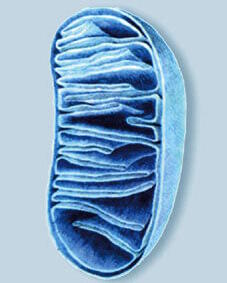
We hear a lot about mitochondria related adaptations, be it for their size and/or density. Mitochondria are the factories of skeletal muscle. They process nutritents and turn them into useable energy (ATP) to produce work that will result in an ouput, in our case, a power output that will make you travel a given distance on your bike and/or will make you travel that distance faster with a given perceived exertion. More mitochondria means more power, less exertion and/or more distance traveled. That is why this specific aerobic adaptation is important for cycling performance. How do one increases his mitochondria density and/or size?


Our little friend, the mitochondrion


LSD

There are plenty of ways to induce such adaptations but I want to focus on a particular way to acheive it: long distance riding. I thought this would be appropriate since I am in the middle of a high volume riding week. Its been argued a lot but evidence shows training a lot of hours in term of volume and frequency is a very efficient way to induce mitochondria biogenesis. The intensity should generally be below the first ventilatory threshold, which happens around 2mmol blood lactate concentration. Its a typical endurance pace, nothing hard but simply producing a moderate amount of work for extended durations.


How it happens?

Long distance riding involves repeated low energy muscle contraction over a significant period of time. These muscle contractions repeated thousands of time create a rise in the level of intramuscular calcium, which is a mineral playing a major role in muscle contraction mecanism. This unusual calcium concentration activates an enzyme called Calcium Modulin kinase (CaMK) which in turn stimulates an activator called PGC-1alpha. The latest is known to be a major cell signal that promotes mitochondria biogenesis and it is refered to as the ''master-switch''. 


What does it mean?

Riding at easy to moderate intensities for long periods of time will produce the physiological effects described above. This kind of high volume training has a  lot of additional benefits we did not spoke of in the article. Though this approach is not for everyone. An athlete needs to consider his available training time, experience and goals. I would not recommend such a training approach for someone working on a sub 12hrs weekly training regime. I would not recommend to base one's training solely on that approach either. I am not sure where we can set the benchmark for ''long rides'' but I think 3,5hrs would be a minimum to acheive optimal training adaptations using this kind of approach. Frequency should also be considered, as one 4hrs ride per week wont be as effective as multiple long rides.

As with everything else, this should be considered cautiously. There is no ''one size fits all'' training method and everyone is different. A whole lot of other variables also come into play and proper planning of rest and recovery should be taken very seriously with any type of training regime.


Easy day

Thats a proper holiday morning: coffee, cereals and internet stuff. Today is going to be very easy. I might head out in a few hours for a short spin. Legs are so sore and lower back is still very achy too.

I was so disapointed yesterday when we got to the japanese restaurant: my uber-awesome spicy BBQ beef was not on the menu!! They removed it some time ago. Oh gosh I waited so long for that thing and it wasnt available anymore. Needless to say I was very pissed. Sandra chose a Filet Mignon Hibachi with fried rice and I chose the overly deep fried General Tao with fried rice. The rice.... FRIED it is. Cooked on the plate with oil and scrambled eggs then tons of butter thrown in. It makes a very tasty rice but so unhealthy. Thats without talking about the General Tao's chicken. Lots of batter and sweet sauce coating some chicken? Yeah I think there was some chicken in there. Anyways, lucky im riding a bunch, otherwise the food would make me crazy. Its hard to keep good nutritional habits when you're far away from home.

Not much file analysis so far I know. Long rides are not that exciting to analyse exept maybe for the kJ expandure and time in zones when riding the trails. Though dont be too disapointed as I will analyse some files thoroughly when im back home doing intense work. I will also analyse race files as soon as the racing season satrts.

Stay tuned as I will also write a post on how I will calibrate my SRM at home. Pictures included.

Monday, March 4, 2013

First big ride

 Crazy what you can find in the US. Such cheap clothing and shoes. Me and the Mrs went for some shoping in the morning while it was cold outside. Bought some cool shoes and shirts for very little money ahah, awesome!

So today was the first big ride I was doing during our holidays in GA. Those long rides are hard mentally. Good thing I meet someone riding on my loop. He was kind enough to show me arround and he made me discover new places I will certainly go back to on my next rides.

Good ride once again, it was warm enough I could ditch the headwear, the jacket, the wool socks and winter gloves! I even had to wear my tinted lenses! Good steady work with a total of over 3500kJ and some good time logged in Z1 and Z2. Lots of energy expended that needs to be replaced tonight. Now its recovery time andlet the body do its little thing. The master switch should be switched on with that amount of work by a different signal then it would when doing intense work. Tomorrow will be either off or a very light ride, I'll need that recovery time.

Tonight we're going in a Japanese restaurant we went 2 years ago. Since then I am dreaming about their spicy BBQ beef. Time to get that awesome meal, hope it tastes as good as it was 2 years ago!

Sunday, March 3, 2013

Chasing Dub

Chasing someone faster then you on a mountain bike, on some twisty singletracks, has to be one of the best mountain bike specific workout you can get. Whilst it is not structured and can ruin a perfectly planned day, it is the best workout a mtb racer can have because it makes you handle your bike at race speed, it requires the rider to hit different intensities and it forces you to pick good lines.

So I meet this guy named Dub, a master racer here in GA. We had a short chat and I decided to follow him on the singletracks. We did 2-3 full loops and it was an excellent workout. The guy was fast and smooth, handling the bike really well and staying off the brakes when it counted.

Overall, it was a good ride despite being a little more intense then what I had planned for the day. I should have tried to keep it steady Z2 but chasing Dub made it an entirely different workout. Came back home pretty fatigued and for some reason, my abdominals and lower back are totally shot, like if I had a massive abs workout at the gym.

Here are the ride stats. Lets analyze that ride with a specific XC mtb perspective.

2800kJ
Z2: 1h17min
Z3: 38min
Z4:15min
Z5: 9min

Now lets have a more precise look at that power distribution.

Time spent between:
0-150W: 85min
300-400W: 22min
400-800W: 7min

I left everything between 150W and 300W out of the equation, you will understand why. I want to enlight a particular aspect of mtb riding and racing (given I chased Dub!). So what can we understand from the above stats?

First, I spent almost an hour and a half coasting and/or soft pedaling. That includes descents, corners where I couldn't pedal through and technical features I needed to overcome. That is a significant amount of time spent doing very little work you're thinking, and you're half right. Coasting on the trails, like mentionned above, is often forced by descents and technical features. During those segments, you pedal softly but your body is still working quite a lot. Indeed, handling the bike at speed, railing corners and maintaining traction all the way through requires some effort. This effort is not reported in the session kJ expendure. Therefore we could safely bet the session burnt more then 2800kJ. How much exactly? No way to know.

Second, lets add the two remaining ranges together, which would give us 29min spent between 300W and 800W. Nothing spectacular here, especially when you think a proper Z4 session would pile a mere 40min+ between 300W and 400W. Now the particularity of this specific distribution relies in efforts duration. Most, if not all of the time spent in that range is the result of multiple short, sharp efforts of less then approximately 15 seconds. What is even more interesting is those efforts were generally following a period of soft pedaling or coasting (see above).

That brings me to that specific mtb riding/racing aspect I wanted to talk about: the neuro-muscular (NM) demand of such bicycle riding. Suddently going from 50W to 350W or from 140W to 650W requires a very specific NM demand. The motor units recruitment, the firing patern and muscle contractions are very specific and different from, say, road riding. The kind of specificity you can't replicate on the trainer or on the road. Sharp accelerations out of corners, high intensity efforts to get over that steep little bump, muscle contractions required by clearing obstacles or constantly trying to be light on the saddle, lifting your butt arround to keep traction, etc. All those situations are what makes the NM demand of mtb riding/racing so specific. An aspect that shouldn't be neglected in a serious rider's training programme.

Saturday, March 2, 2013

Shreding and ripping corners in GA

After yesterday's little exploration ride, it was time for a first proper training day. Good night of sleep made it even more motivating. It has been a long time since I woke up past 8h30 AM. I feel I will need at least another good night and maybe two more before I catch back on yesterday's missed sleep. Though I've heard you can't catch back missed sleep...

So I headed out under a very light, melting snow and arround 2-3 C. The trails were open today so I went there, about 45min of riding from where im staying. I rode the trails for about 2h30 and then came back the same way I had gotten there. These trails were quite nice actually. Very, very flowy and fast with a significant lack of tecnical features. They were really fun to ride nevertheless and it was a good high speed bike handling skills practice. Ground is mostly hard pack, twisty singletracks with very little elevation; the perfect conditions to fly! Killing those corners at high speed was fun and im starting to trust those new tires I just got, some Kenda Small Block 8.

Trail riding means loads of fun but also very stochastic power output, very little control on it and a lot of coasting time and soft pedaling. Therefore, a lot of time is spent in Z1 and a few spikes are forced by the terrain which means some time is also logged in Z5 and Z6. Overall though, it was still a good workout, fitnesswise and for skills too. Finished the day with 2500kJ. Lots of food on the menu tonight, with some wine of course, but not too much if I want to go ride tomorrow. Alcool isnt the best thing for recovery and sleep, I should write about that in a near futur.


 This is about as technical as it gets here in Georgia. At least where I am.


Hardpack clay: fast!

Tomorrow will be another trail workout but with more time on the roads too. Should be good.

Friday, March 1, 2013

Sketchy start in deeep sawthh!

That was one heck of a long drive: 24hrs, non stop, 2 drivers. Trying to sleep in a Pontiac Vibe isnt easy done when its packed with stuff, no room for the legs, no comfy spot to rest your head, not much real sleep all in all. Anyways, a huge thank goes to my lovely Mrs for driving a shit ton more then me even with a cold. Im soft, she's a tank. That makes a lot of place to drive through: Ontario, New-York, Pennsylvania, West-Virginia, Maryland, Virginia, Tennessie and finaly Georgia. I would have hoped for warmer temperature, its barely 5 C, its windy, quite cold, but anyways, we're here, lets have fun!

So I went for a little recon ride, checking if the loop I maped out using google maps was rideable and also hitting some trails. All good until I realized my SRM stoped working!!! Oh bummer! In my excitment, I had not tightened the cranks enough and there was a sligh play which moved the crank too far away from the magnet. Result: no cadence, no power. Came back home, made some tests and I think it will be all good to go tomorrow. I only need to buy some super glue and glue my magnet back on right in the sweet spot, these SRM can be picky when it comes to cadence sensor.

So I ended the day with a Z2 ride with quite some time in Z3 because I was not sure I'd make it back home in time, having been delayed by the SRM issues.

Tonight is restaurant time with the Mrs and her uncle, hopefully not too much wine and a good night's sleep after, we need some rest.